Green transition in Höga Kusten
During 2024 and 2025, Leader Höga Kusten, together with Kramfors, Härnösand, Sollefteå, and Örnsköldsvik municipalities, will drive a joint effort to accelerate the green transition in our rural areas.
About the project
Leader Höga Kusten will work together with Sollefteå, Kramfors, Härnösand, and Örnsköldsvik municipalities to generate, coach, and scale up support for more development ideas for sustainable transition in the rural areas of Höga Kusten.
In our strategy, we point to the need for local sustainable transition – but today, few actors step forward to drive the development. At the same time, the municipalities' sustainability strategists notice that it can be difficult to know how best to promote and support the initiatives that actually exist.
Therefore, we want to in this project investigate how we together can create better conditions – and open up for more who want to drive the green transition.
Investments 2024–2025
We invest 400,000 SEK in local transition initiatives. In each municipality, activities and networking meetings will take place with a focus on, among other things:
-
Increased food production
-
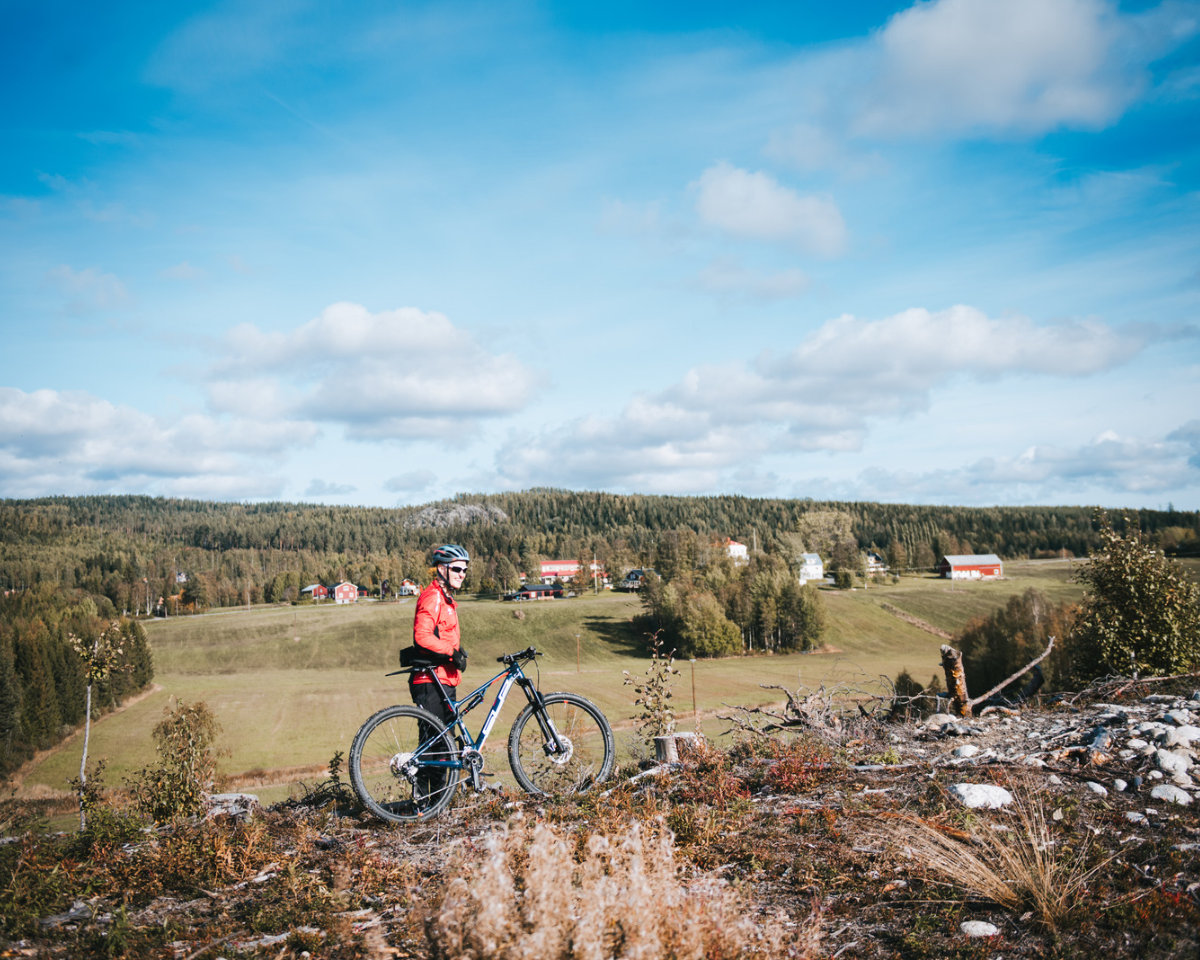
Improved cycling accessibility
-
Meetings between Sámi cultural heritage and green transition
- Collaboration for local biogas in Bredbyn
We see these 400,000 SEK as a start to something bigger. We are constantly looking for people and organizations that want to drive development ideas related to sustainability and green transition.
– Felicia Edholm, project manager

The collaboration network in the project consists of the project manager at Leader Höga Kusten and the sustainability strategists Sofia Larsson (Kramfors Municipality), Maaike Smit (Sollefteå Municipality), and Daniel Johannsson (Härnösand Municipality), as well as Lena Finne Jansson, head of Strategic Sustainable Development in Örnsköldsvik Municipality.
Many want to live more sustainably but find it difficult to translate thoughts into practice. Through the project, we want to investigate how we together can promote development ideas that strengthen ecological sustainability in Höga Kusten.”
– Maaike Smit, sustainability strategist, Sollefteå Municipality
During the autumn of 2025, the network will drive a SPRINT for green transition – an intensive process where the municipalities, together with Region Västernorrland and researchers, gather around concrete cases to truly test ways forward. By combining local perspectives, regional knowledge, and national research, we want to transform ideas into action plans that can make a real difference in our rural areas.
Test beds
Test bed Härnösand
Reduce car dependency – Bajka Härnösand and Höga Kusten
The test bed in Härnösand has investigated how a locally anchored bike loan system can contribute to reducing car dependency and creating sustainable mobility. The project originated from Härnösand central and connected important destinations in the city with a focus on both residents and visitors.
The work has resulted in a technical solution for an e-bike-based system, a model for association operation and identified locations for stations. The interest from local businesses and organizations has been significant, and several actors have declared interest in participating in a continued investment.
The project shows that a local bike system can not only reduce climate impact and car dependency but also promote health, strengthen civil society, and create a more integrated mobility in Höga Kusten. The next step is to advance the concept in a pilot or implementation project.
Testbed Örnsköldsvik
Explore and practice green transition from a Sámi perspective
The testbed in Örnsköldsvik has explored how traditional Sámi knowledge can become a driving force in the green transition. Through three workshops – focusing on skin tanning, nature's pantry and intangible cultural heritage as innovation power – participants have had the opportunity to practically try crafts and plant knowledge, while new ideas about products and methods have been developed.
The results show that there is great potential in reclaiming and developing old techniques to meet today's sustainability challenges. It concerns both circular economy and zero waste, a toxin-free everyday life and how nature's resources can be used for food, medicine, and preparedness.
The collaboration between Orrestaaren Saemiesibrie, Örnsköldsvik municipality, Örnsköldsvik museum, and several cultural actors has created a strong foundation for the future. The next step is to build further in larger projects – preferably together with businesses, universities, and international partners – to make this knowledge accessible to more.

Testbed Kramfors
Sustainable food preparedness through increased local food production
The testbed in Kramfors has aimed to strengthen local food preparedness and increase the level of self-sufficiency, with a particular focus on vegetable cultivation. By connecting local producers with the municipality's procurement system, creating new forms of collaboration, and starting a municipal test cultivation, the foundation for a more robust food supply has been laid.
The results show, among other things, that the interest from local growers has been greater than expected, several deals have already been made, and that a local food preparedness plan has now been incorporated into the municipality's operational plan for 2025.
The collaboration has been broad and included the Agricultural Society, LRF, the County Administrative Board, Nordvik, Hola Folk High School, Bygdsam Nätradalen, and several municipal operations. Dialogue and collaboration have been the key to the successes – and the work continues to scale up and spread the experiences throughout the High Coast.

Testbed Energy
Pre-study for biogas in Bredbyn
This testbed is led by Övik Energy in collaboration with local farmers, LRF, Polarbröd, Bygdsam, and several actors. The purpose is to investigate the possibilities of building a biogas plant in Bredbyn that can utilize local residual streams – such as food waste, manure, and food scraps – and convert them into energy, vehicle fuel, and nutrient-rich fertilizer for agriculture.
The work focuses on three parts:
-
Local and secure energy supply at a reasonable price
-
Circular economy where by-products become resources
-
A sustainable food system through the return of nutrients to arable land
The pre-study is ongoing during 2025 and will result in a basis for future investments in biogas.

Project period
ht 2023 – ht 2025
Project owner
Collaboration between Leader High Coast's organizations
Web and social media
www.leaderhogakusten.se
Sustainable Kramfors
Total financing
775,081 kr
Incoming EU funds have been granted from:
The Agricultural Fund
